

Entering Formula 1 isn’t about cars.
It’s about building a 600-person organization from scratch across three countries in under 3 years, with a fixed deadline that cannot be moved.
With the new F1 season starting this week, there is one story I’m following closely: Cadillac is entering the sport as a brand new team.
The way they built their organization offers lessons for executives competing under pressure.
The world of Formula 1 motorsports often revolves around the superstar drivers. But what most people don’t realize is that to build the car and run a race at the highest level, you need around 1,000 people. That makes it the largest team sport in the world.
Yes, the cars are engineering marvels. But what separates the winners from the back of the grid isn’t just how well they build their cars. It’s how well the organization behind the car functions under extreme pressure.
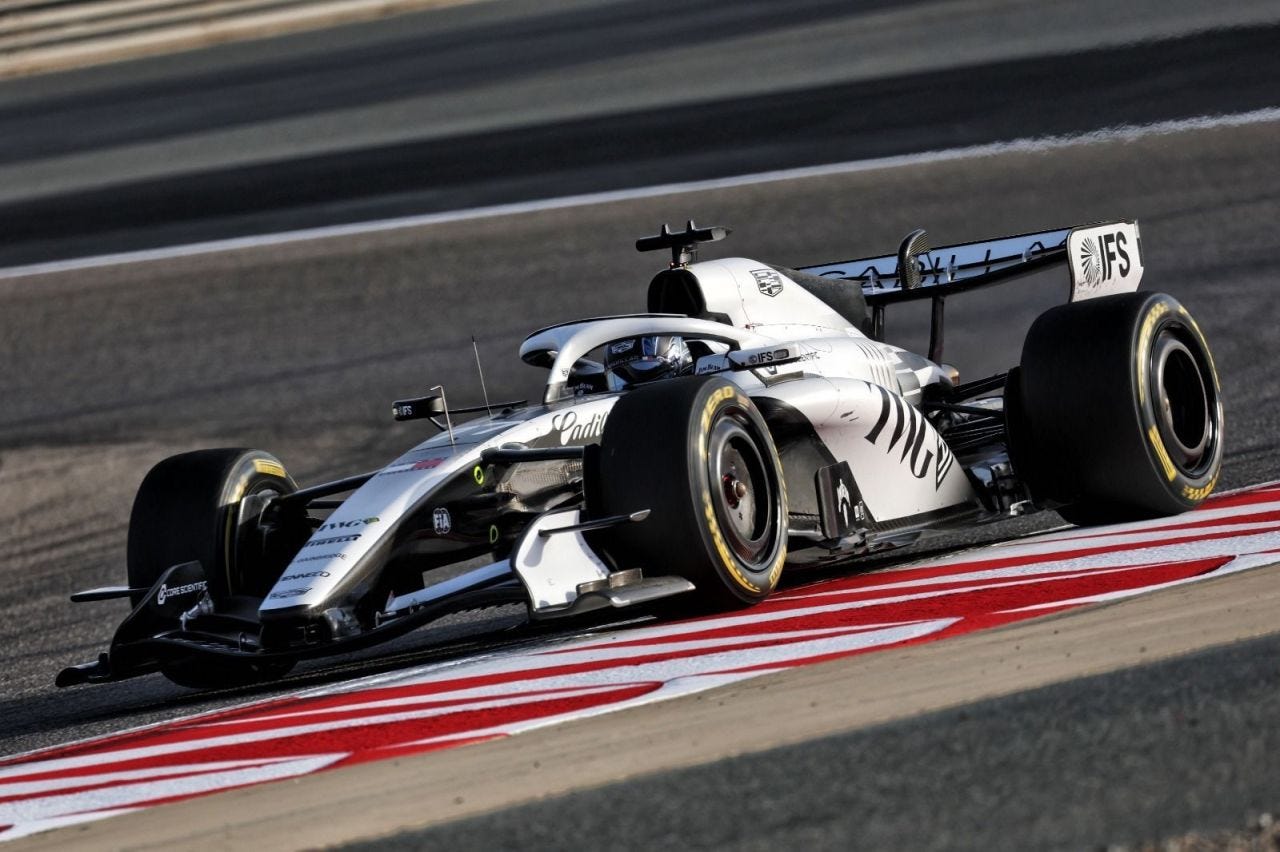
Building an F1 team from scratch
In 2023, the Cadillac Formula 1 team didn’t exist. No engineers. No factory. No infrastructure. No culture.
By mid-2025, they had posted 595 roles and received 143,265 applications (>240 applicants per role!) They shortlisted 9,051 candidates, conducted 6,500 interviews, and hired over 520 people. Their aerodynamics department alone grew from 6 engineers to more than 100 in just a few months.
They built a $200M, 37,000 sqm headquarters in Indiana. They opened design and aerodynamics facilities across six buildings in Silverstone, UK. And they started construction on a dedicated power unit facility in North Carolina, where they employ 350 specialists.
All of this with a hard deadline: the first pre-season test in January 2026. Miss that, and you miss the season. There’s no “we’ll push the launch to Q2.”
Mission Control instead of Command & Control
But putting a group of people together is only the start. Team principal Graeme Lowdon compares it to putting a man on the moon:
“If you look at the task in hand, we’ve got immovable deadlines. We’ve got a massive necessity for peer-to-peer interaction. We need engineers talking to engineers. And so we’ve looked to have a very, very flat management structure.”
“What you can’t have is an engineer here having to go up and down a particular hierarchy and then hop across, in our instance, not just a different geographic location, but a different country altogether, and then go up and down. So instead, it’s a kind of different structure where it’s mission control instead of command and control.”
“It’s highly modelled on the Apollo project. It’s very similar. OK, we’re not putting a man on the moon, but it feels like it sometimes!”
Rehearse before you race
But what impressed me most about Cadillac isn’t the hiring, the factories, or the org structure. It’s what they’re doing before a single wheel has turned in competition.
During a race, hundreds of people work in parallel: trackside engineers, remote engineers in the factory, strategists, data analysts, and the pit crew. They all need to communicate, coordinate, and make split-second decisions together, every single lap.
Cadillac realized they needed to rehearse this.
“You don’t want the team to be going through the process
of executing a race for the first time when it’s the real thing”
- Graeme Lowdon, Cadillac’s Team Principal
So they designed the communication protocols and working agreements to ensure it ran smoothly. Because at 300 km/h, there is no time for confusion.
This is why, throughout the 2025 season, Cadillac had a “ghost team”. They ran full race-weekend command center rehearsals and practiced strategy calls and decision flow for races they’re not even in yet. Engineers simulated entire Grand Prix in real time, including tire degradation modeling, pit-stop timing, weather scenarios, and escalation protocols.
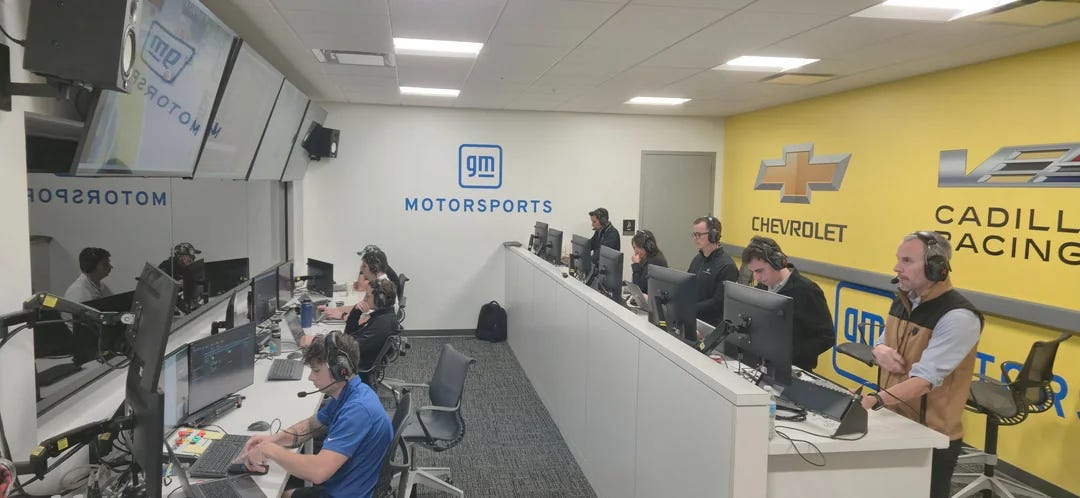
During one of the exercises, the driver radios in that his tires are wearing out faster than expected. The race engineer receives the message and immediately relays it to the strategy team. They analyze the options. Should the driver change a setting on his steering wheel? Come in early for a pit stop? Adjust his driving style to manage the degradation?
Multiple sub-teams discuss, coordinate, and agree on a recommendation. The proposed solution is communicated back to the driver, clearly and fast.
Cadillac isn’t waiting to learn under pressure. They’re building decision muscle memory before the pressure arrives.
When you’re leading a team or organization, consider designing your Operating Rhythm (5 min 🎥). It’s an intentional cadence of meetings that creates the heartbeat of progress. Weekly coordination. Monthly reflection. Quarterly strategy reviews. Together, they form the connective tissue that allows an organization to move fast without falling apart.
It’s not about the fastest car. It’s about the smoothest organization.
Most organizations invest heavily in the what of execution. The plan. The people. The budget. The milestones.
But they skip the how. How will decisions flow when things get messy? What’s the rhythm of coordination between teams? When do we check progress, and how do we steer? What happens when the unexpected hits?
The fastest teams aren’t the ones with the most brilliant individuals. They’re the ones where information flows freely, decisions are made close to the work, and everyone knows how their contribution connects to the shared goal.
Google discovered the same thing when they studied 200 teams across their organization. The number one factor that differentiated top-performing teams was not who was on the team. It was how they worked together. Psychological safety, dependability, clarity of roles and goals. In other words, the organization is the machine.
Another case is Red Bull Racing’s transformation. When Red Bull bought the underperforming Jaguar Racing team in 2004, the engineers were talented but buried in bureaucracy.
The team had a thick middle management layer that spent most of its time preparing for the monthly board meeting. They focused on reporting causes of failures, finding blame rather than listening and helping engineers set the conditions for the team to thrive.
Under Christian Horner's leadership, he changed one thing: he created an environment where specialists could flourish. Decision rights were moved to the people doing the work. Five years later, they were world champions.
In the end, the quality of the organization determines the quality of the results.
(PS. Both cases are covered extensively in the Unblock book.)
So what, now what?
If you’re leading a major initiative, a transformation, a new venture, or a product launch with a hard deadline, ask yourself:
Have we designed the operating rhythm for how we want to execute?
Do the people doing the work have the decision rights they need, or does everything have to be escalated upward?
Are we rehearsing the hard moments before they arrive, or are we waiting to discover communication gaps under pressure?
Cadillac will hit the track in 2026. Whether they’re fast remains to be seen. But the organization they’ve built is already impressive.
Because in the end, it’s not about the car.
The organization is the machine.
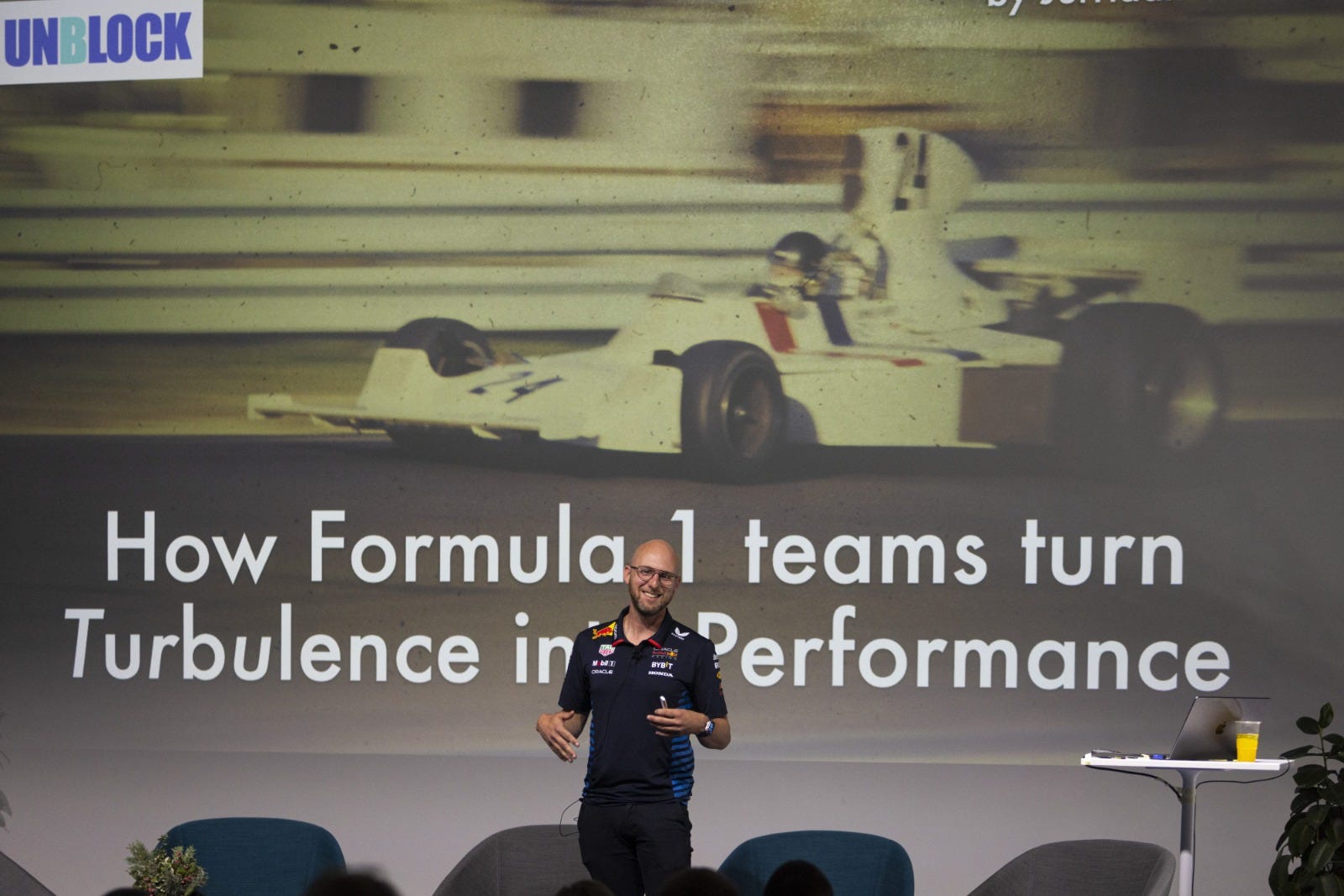
If you enjoyed this, grab your copy of one of my books Formula X or Unblock. Or consider booking me as a speaker at your next event.
That’s it. I hope you enjoyed it. Simply hit ‘reply’ or comment. I read every message.
