

“Whenever I’m asked to make a decision for a second time, I find a way so I don’t have to make it again.” - Sjef Boekestijn, CEO Egala
Sjef said this at the kick-off of a leadership program we at Unblock are running for them. Egala is a fast-growing trucking company with more than 1,800 trucks and 3,500 people across Europe.
He says this for two reasons. Every decision he keeps is time he and his board can’t spend on where the business goes next. And he believes the people in his organization are capable of making these calls.
That is what the program is about: working more ‘on’ the system, rather than ‘in’ it. One decision at a time, he is handing authority to the people closest to the work.
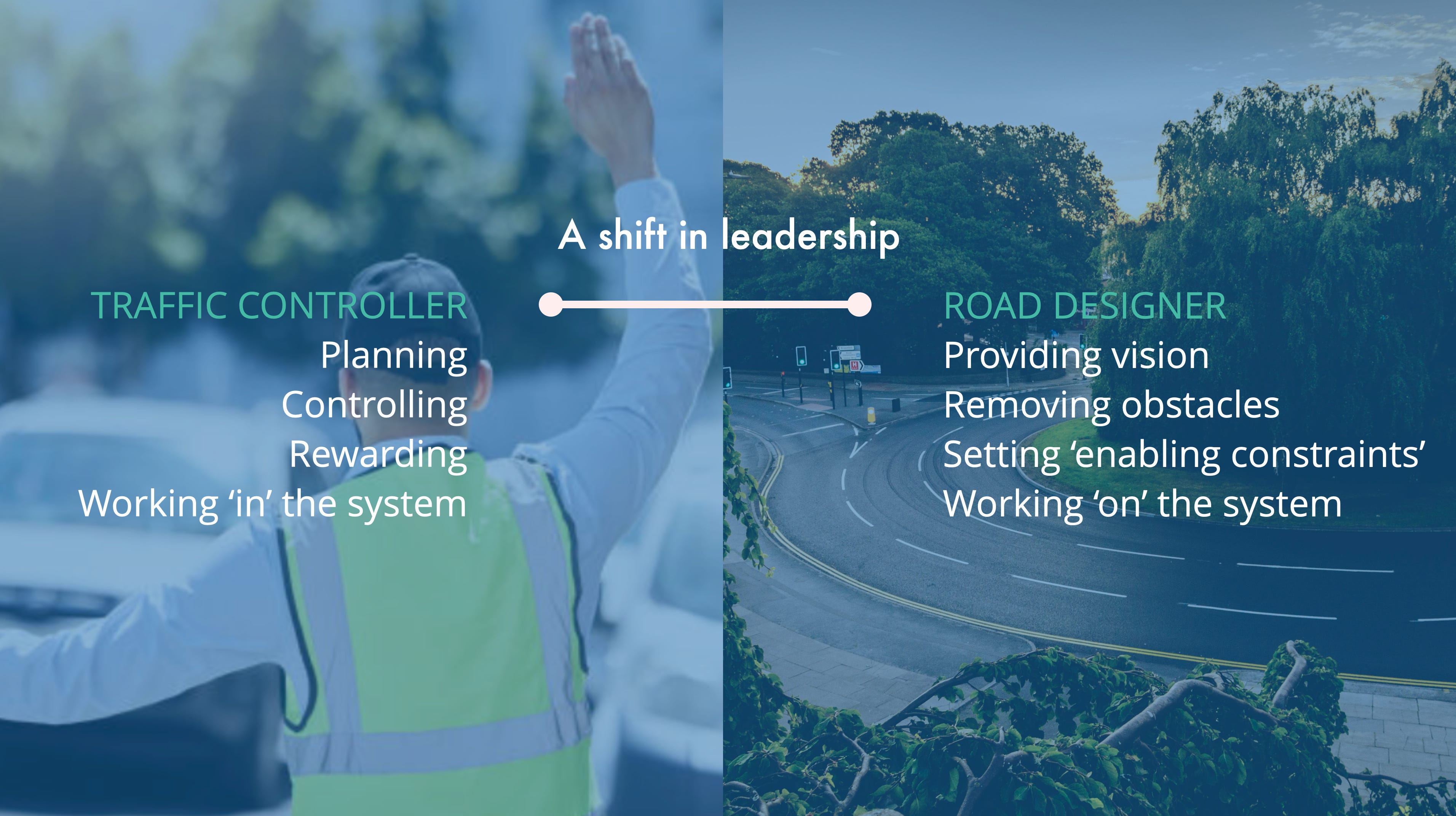
A shift in leadership: traffic cop or road designer?
Many leaders act like a traffic cop. They stand in the middle of the intersection, telling cars when to stop, when to go, when to turn left or right. They’re busy. Deeply involved in the work of their people.
This has real advantages. They know the details. They know exactly what’s going on. They handle escalations fast.
But they can become the bottleneck. When they’re overloaded, traffic stops. And the people they lead never learn to solve problems or work across silos themselves. They learn to run everything by their manager.
The alternative is to act like a road designer. Road designers take the helicopter view. They design intersections so traffic flows on its own. When they spot a bottleneck, they don’t start waving their arms. They redesign the road.
At work, that means proposing changes to how we work: new guardrails, roles, working agreements. And staying off the intersection. Road designers are still in control, but they exercise it by setting helpful constraints and explaining which problems need solving, and why.
“We don’t want managers in meetings all day”
When I shared this metaphor with the same CEO, he didn’t like it at first:
“We don’t want our managers sitting in meetings all day, sending PowerPoints to each other about how the organization should change.”
Fair point. Picking between being a road designer or a traffic cop is a balancing act. Sometimes it’s valuable to be involved in the work. Other times it’s more useful to step back and change how the work flows.
So how do you know when to switch? His own rule gives the answer. The first time a question lands on your desk, answer it. The second time, that’s your signal to redesign the road.
Break the permission loop
Someone walks in. “Shall we do this?” Or: “Can you take a look before we go ahead?”
It feels good to say yes or no. To be asked for your approval.
But every answer keeps the loop alive. Next week, they’ll ask again.
So instead, pause and ask yourself:
Why am I making this decision, and not them?
What do I know that they don’t?
What guardrails or clarity would let them make the call without me?
What would I have to give up for this decision to never come back to me?
“The most essential work of the leader is to create more leaders” - Mary Parker Follett
Three practices to get off the intersection
Distribute decision rights with explicit roles
Make it clear which role can decide what. Use this template:
Someone holding role X…
…decides who to / how to / when we…
…can approve or reject…
…may spend … per … (period)
…has the final call on…
Be specific. “Manages the team” says nothing. “Has the final call on the team’s priorities” does. Writing a decision right down is the act of giving it away, and that’s why it’s harder than it looks. More about this in chapter 7 of my Unblock book or in this article:

Define the Waterline
This idea comes from W.L. Gore, the company behind Gore-Tex. Imagine you and your team are on a ship. If a bad decision punctures the ship above the waterline, it’s annoying, but you can get to shore and repair it. If something blows up below the waterline, the ship might sink. That harm is irreversible.
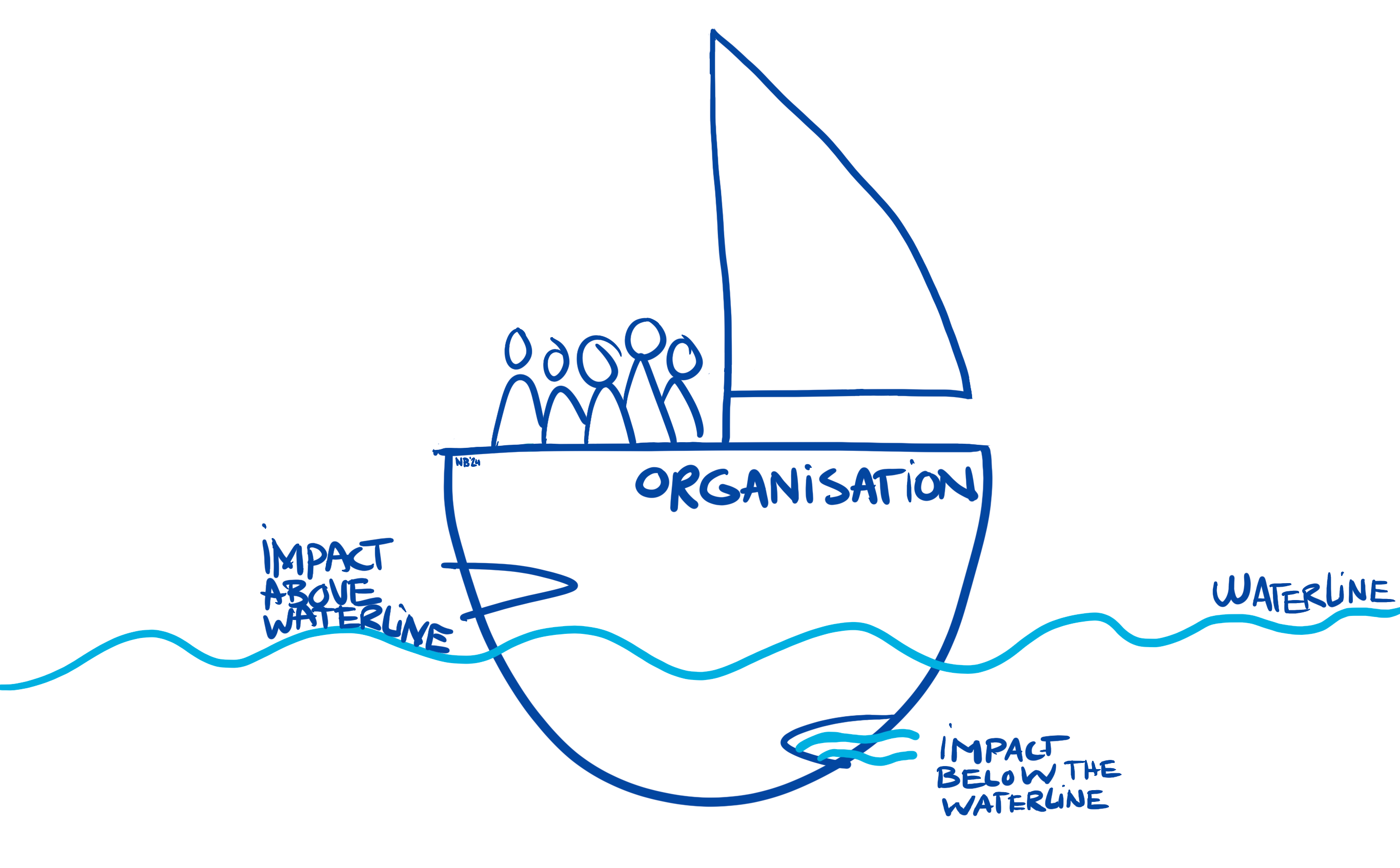
A company could describe it like this: below the waterline is anything that can hurt people, break the law, or get us in the headlines. Above the waterline: if it blows up, it costs less than €10k or affects fewer than 500 customers.
Where is the waterline for your team, department, or organization? What can people decide without asking anyone for permission?
Work on strategic clarity
When people know where the organization is heading, and which trade-offs it’s willing to make to get there, they’re far more likely to make the right call on their own. Even-Over statements are a simple way to make those trade-offs explicit. Read about it here:

These practices aim to move authority to where the information already is.
This week, pick one question that has landed on your desk twice. Then redesign the road so it never lands there again.
See you there?
I’m one of the keynote speakers at the Regional Scrum Gathering Brussels, October 8-9.
I’ll also be joining the Global Peter Drucker Forum, Nov 4-5 in Vienna.
That’s it! To dive deeper, grab your copy of one of my books Formula X or Unblock. Or book me as a speaker at your next event. To get in touch, simply hit ‘reply’ or comment. I read every message.